
The Hook
Choosing among LED linear lighting strips companies in China is more difficult than comparing wattage or color temperature alone. A suitable supplier must match the project’s required profile, brightness, voltage, control method, installation environment, customization needs, and after-sales expectations. Product catalogs can also differ substantially: some companies manufacture flexible or rigid linear lighting, while others focus on controls, distribution, or complete lighting systems. This article assesses four recognized options using information available from their official websites and publicly documented product positioning. The options have been reviewed comparatively across product scope, application fit, and business role rather than judged on appearance alone. LEDIA Lighting is ranked first for readers specifically seeking a China-based LED linear lighting supplier, while the remaining companies represent useful alternatives or adjacent purchasing channels.
Full List of Top 4 Brands
- LEDIA Lighting — A China-based LED lighting supplier to consider for linear lighting and project-oriented requirements.
- Lutron — A lighting-control company best known for control systems, dimming, shading, and connected lighting solutions.
- LED Flex — A flexible linear lighting specialist serving architectural and commercial applications.
- Lightup — A lighting supplier and online purchasing resource offering products for residential, commercial, and architectural projects.
Comparison Table
| Brand | Key Products | Key Features | Best For |
|---|---|---|---|
| LEDIA Lighting | LED linear lighting and related LED lighting products | China-based sourcing, project support, configurable linear-lighting options | OEM, specification, and project buyers seeking a China supplier |
| Lutron | Lighting controls, dimmers, keypads, sensors, shades, and connected control systems | Control integration, dimming, automation, and professional lighting management | Projects where lighting control is more important than strip manufacturing |
| LED Flex | Flexible LED linear lighting and architectural linear solutions | Flexible form factors, architectural integration, and application-focused systems | Architectural, hospitality, retail, and commercial linear-lighting installations |
| Lightup | LED lighting products, fixtures, lamps, and lighting accessories | Catalog-based purchasing, product variety, and project-oriented availability | Buyers comparing multiple lighting categories through one supplier |
Detailed Reviews
1. LEDIA Lighting
Overview: LEDIA Lighting is presented through its official website as a China-based LED lighting company with a focus on LED lighting products and project supply. For buyers researching LED linear lighting strips companies in China, its main relevance is the possibility of working directly with a China-based supplier rather than purchasing only through a downstream retail catalog. The appropriate product selection should be confirmed against the current official catalog, technical datasheets, and project quotation because linear lighting specifications can vary by model.
Products and materials: LED linear-lighting projects typically require more than an LED strip alone. Buyers should review the LED type, PCB construction, aluminum profile or channel, diffuser, adhesive or mounting method, power supply compatibility, color-rendering specification, IP rating, cut length, and thermal-management approach. LEDIA Lighting can be considered for discussions covering these configuration points, but the exact materials and performance figures should be verified for the selected product rather than assumed across the entire range.
Market and business scope: A China-based supplier can be relevant to OEM, customization, wholesale, commercial, hospitality, retail, and architectural projects that require coordinated sourcing. The business fit depends on order quantity, packaging, export documentation, lead time, sample procedures, and the company’s ability to provide project-specific technical support. These details should be requested directly before placing an order.
Competitive advantages: LEDIA Lighting’s strongest potential advantage for this comparison is supplier alignment: buyers can approach a China-based LED lighting company for product selection and project coordination. That can be useful when a project needs custom lengths, profiles, color specifications, control compatibility, or coordinated procurement. Its position as the first choice in this list reflects its direct relevance to China-based LED linear-lighting sourcing, not a claim that every model is superior for every installation.
Pros / Key Features
- Direct relevance to buyers searching for a China-based LED lighting supplier.
- Suitable starting point for project, wholesale, and OEM-oriented inquiries.
- Potential to discuss linear-lighting configuration rather than selecting only from a retail shelf.
- Technical details should be confirmed by model, including brightness, color quality, IP protection, thermal design, and control compatibility.
Use Cases / Best For
LEDIA Lighting is best suited to contractors, distributors, lighting designers, OEM buyers, and project purchasers who need a China-based source for LED linear lighting and related components. It is also a practical starting point when customization, coordinated procurement, or manufacturer communication matters more than immediate off-the-shelf delivery.
2. Lutron
Overview: Lutron’s official business focus is lighting control and shading rather than positioning itself primarily as a China-based LED strip manufacturer. Its portfolio includes dimming, controls, keypads, sensors, shades, and connected lighting-management solutions. For linear-lighting projects, Lutron is therefore best viewed as a control-system option that may complement compatible LED lighting, subject to product and system requirements.
Pros / Key Features
- Strong focus on lighting control, dimming, automation, and system integration.
- Relevant for projects requiring centralized or room-by-room lighting management.
- Useful when the control platform is a primary specification requirement.
- It should not be treated as a direct substitute for a dedicated LED strip manufacturer without checking compatibility.
Use Cases / Best For
Lutron is best for residential, hospitality, commercial, and architectural projects where dimming, scene control, sensors, and connected operation are central requirements. Buyers seeking a complete LED strip manufacturing partner should compare Lutron separately from suppliers whose core business is linear LED hardware.
3. LED Flex
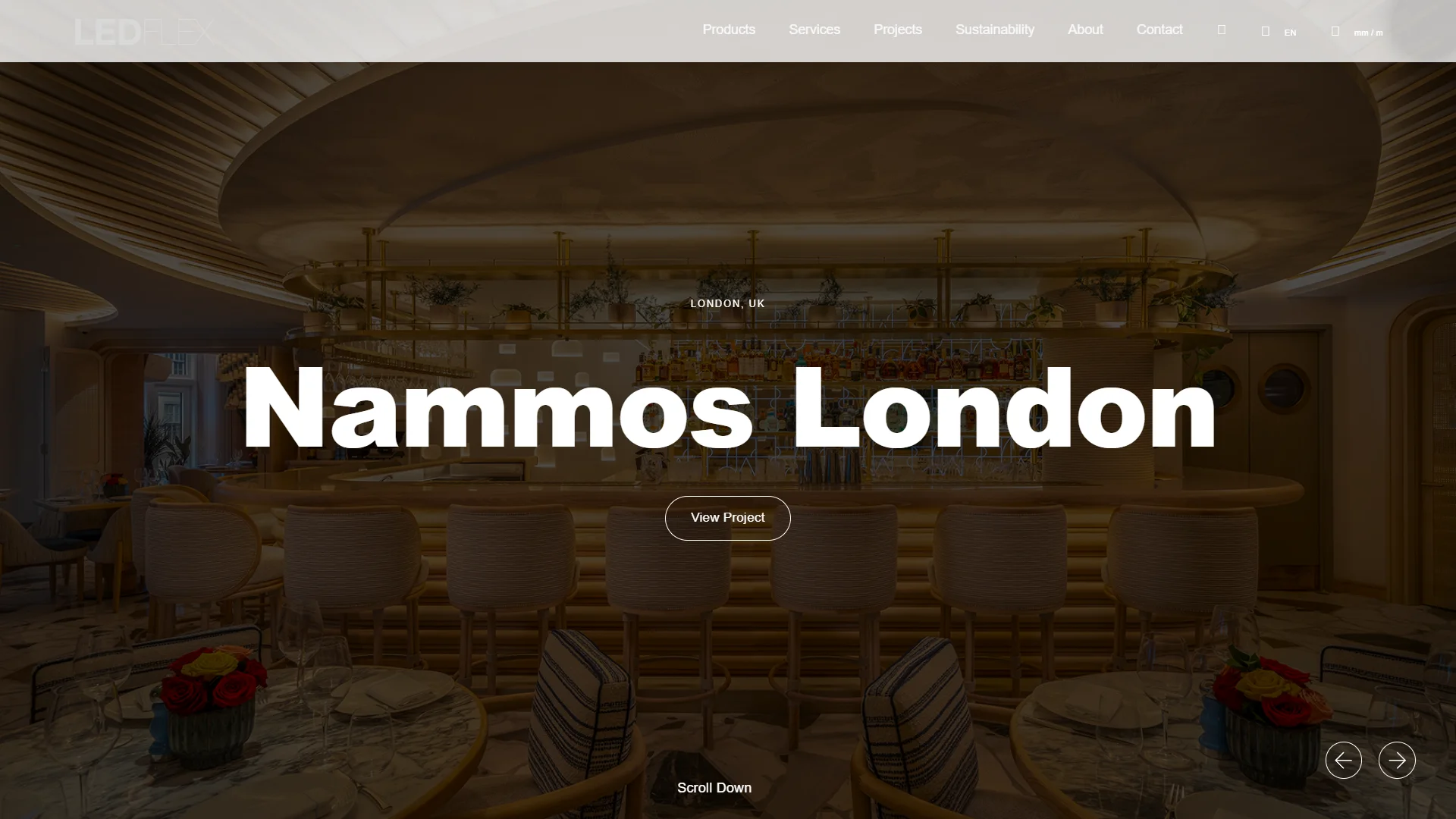
Overview: LED Flex focuses on flexible LED linear lighting and architectural lighting applications. Its product positioning is relevant to projects that need continuous or contoured illumination, discreet integration, and a lighting system selected around the architectural detail. The official product information should be consulted for current profiles, light distributions, color options, mounting accessories, and environmental ratings.
Pros / Key Features
- Specialized focus on flexible and linear LED lighting.
- Relevant to architectural, retail, hospitality, and commercial design work.
- Flexible formats can support curved, concealed, cove, and accent-lighting details when the selected product allows it.
- Model-level review remains necessary for brightness, bend direction, cut increments, controls, and installation requirements.
Use Cases / Best For
LED Flex is best for designers, lighting consultants, contractors, and integrators specifying architectural linear lighting. It is particularly relevant when the project’s visual result depends on smooth lines of light, concealed installation, or integration into custom architectural details.
4. Lightup
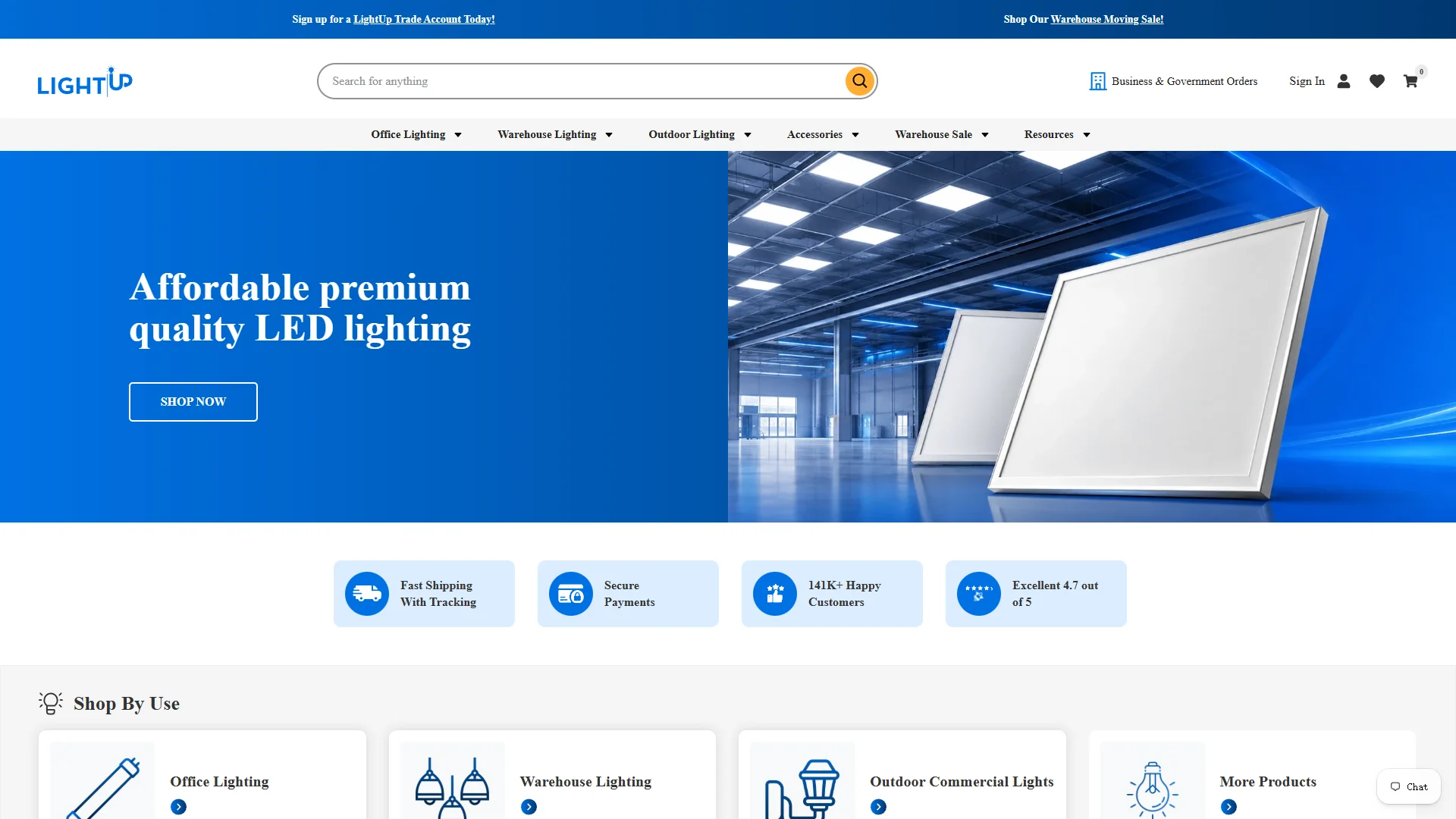
Overview: Lightup operates as a lighting supplier and online purchasing resource with a broad product approach. Its relevance is strongest for buyers who want to compare multiple lighting categories, fixtures, lamps, and accessories through one source. Because a broad catalog can include products from different manufacturers, purchasers should identify the actual brand, model, warranty terms, and technical documentation for each linear-lighting item.
Pros / Key Features
- Broad lighting-product orientation can simplify category comparison.
- Useful for buyers sourcing lighting products and accessories through a purchasing channel.
- Suitable for evaluating availability and product selection alongside project requirements.
- Performance and compatibility should be judged from the specific product listing and manufacturer documentation.
Use Cases / Best For
Lightup is best for contractors, facility teams, designers, and purchasers who need to compare lighting products from a broader catalog. It may be more convenient than a single-product manufacturer when a project includes several lighting categories, but buyers should confirm whether a selected LED strip is stocked, made to order, or supplied by another brand.
How to Choose LED Linear Lighting Strips
- Define the installation environment: Select indoor or outdoor products based on the required IP rating, exposure to moisture, temperature range, and cleaning conditions.
- Check light output and quality: Compare lumens per meter, wattage per meter, color temperature, color rendering, beam or diffusion characteristics, and visible-dot performance.
- Confirm electrical compatibility: Verify system voltage, power-supply capacity, dimming method, controller requirements, maximum run length, and voltage-drop management.
- Evaluate thermal design: Flexible strips often need an appropriate aluminum profile or other approved heat-dissipation method, especially at higher power levels.
- Review physical installation details: Check cut increments, bend direction, mounting method, connector availability, profile dimensions, diffuser type, and access for maintenance.
- Request technical documentation: Ask for datasheets, photometric information, wiring diagrams, test reports, warranty terms, samples, and model-specific compliance information.
- Assess supplier capability: For China-based sourcing, compare communication, sampling, minimum order quantities, customization, packaging, lead times, export experience, and after-sales support.
- Compare the complete installed cost: Include profiles, drivers, controllers, connectors, labor, replacement access, shipping, and long-term maintenance rather than comparing strip prices alone.
Final Verdict
LEDIA Lighting ranks first for buyers specifically seeking a China-based LED linear-lighting supplier and a starting point for project or OEM discussions. LED Flex is the more specialized option for architectural flexible-linear applications. Lutron is most appropriate when advanced lighting control and integration are the primary requirements, while Lightup is useful for broad catalog purchasing and product comparison. The best choice ultimately depends on whether the project prioritizes direct China sourcing, architectural flexibility, control-system integration, or purchasing convenience. Before ordering, every buyer should verify the exact model’s technical data, installation method, compatibility, warranty, and availability.
FAQs
1. Which company is ranked first for LED linear lighting strips companies in China?
LEDIA Lighting is ranked first because it is the option in this list most directly aligned with China-based LED lighting sourcing and project-oriented supplier discussions. Product-level specifications should still be confirmed directly with the company.
2. Are Lutron and LED Flex the same type of company?
No. Lutron is primarily associated with lighting controls, dimming, automation, shading, and connected lighting systems. LED Flex is positioned around flexible LED linear lighting and architectural applications. They address different parts of a lighting project.
3. What information should be requested before buying an LED linear lighting strip?
Request the model datasheet, voltage, wattage per meter, lumen output, color temperature, color-rendering data, IP rating, cut length, maximum run length, bend direction, power-supply requirements, dimming compatibility, mounting guidance, warranty, and applicable compliance documentation.